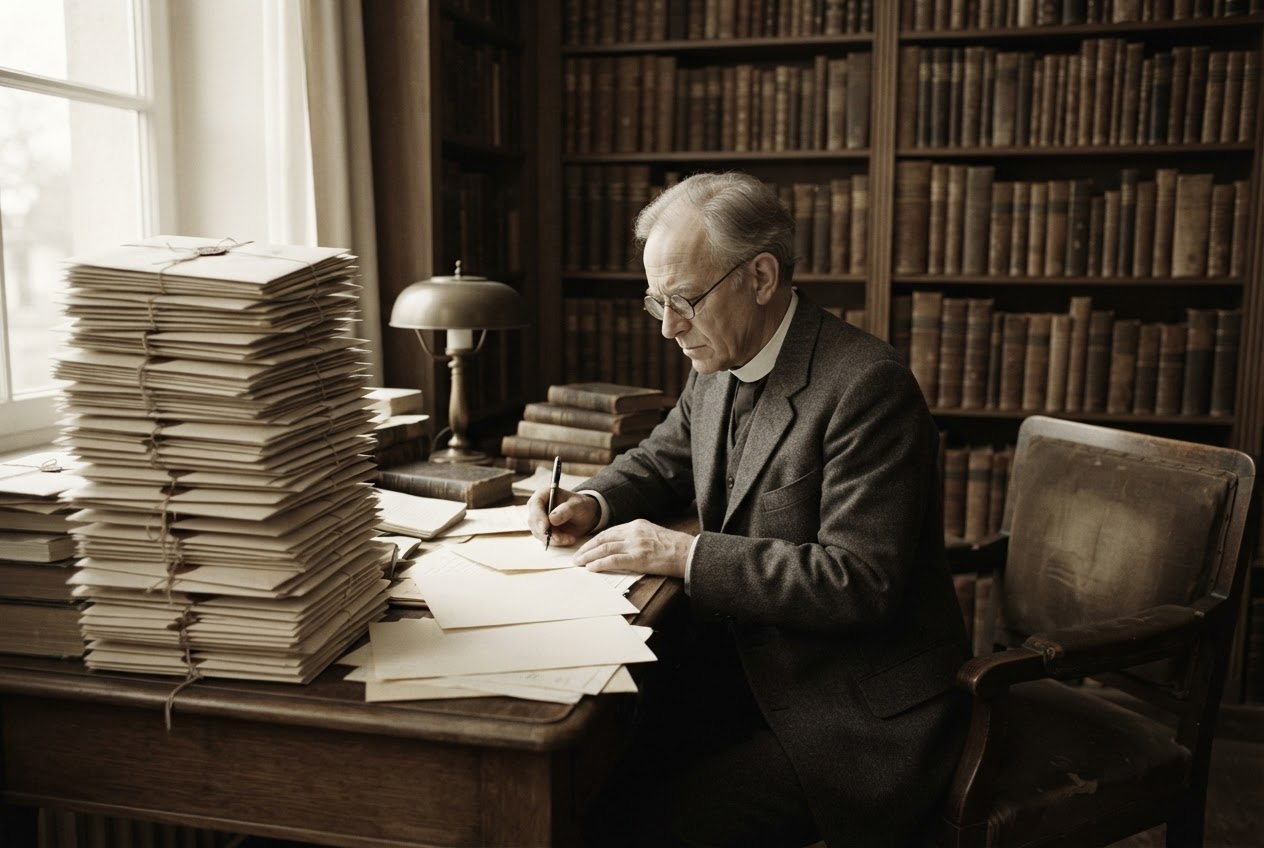
Scholars cause considerable embarrassment by expecting answers to questions they were encouraged to ask.
A group of Catholic theologians has caused considerable consternation after taking the Church's repeated invitations to dialogue at face value.
The scholars had submitted a series of theological questions concerning traditional Marian titles and, in an extraordinary departure from established ecclesiastical practice, expected somebody to answer them.
Their behaviour has been described as deeply regrettable.
“We have spent years encouraging Catholics to listen, accompany and engage in dialogue,” explained a senior ecclesiastical consultant. “At no point did we suggest this would involve answering difficult questions.”
The theologians had compounded the difficulty by citing previous papal teaching, the Church Fathers and the Second Vatican Council.
Officials were particularly troubled by the inclusion of page numbers.
“These matters require sensitivity,” the consultant continued. “One cannot simply arrive with quotations from popes and expect them to be relevant to a discussion about Catholic doctrine.”
When no reply arrived, the theologians made the further mistake of writing again.
This prompted concern that the group had fundamentally misunderstood the meaning of synodal dialogue.
“They appear to think that because they have spoken, somebody else must now speak in return. That is a rather confrontational understanding of listening.”
A proposal to send the theologians a brief acknowledgement was considered but rejected on the grounds that it might encourage further correspondence.
Instead, officials recommended that the scholars enter into a period of prayerful discernment concerning their expectations of communication.
The group has reportedly welcomed the suggestion, while enquiring whether the period of discernment has an anticipated conclusion.
This question has also been referred for discernment.
Meanwhile, a new ecclesiastical working paper is understood to be exploring the distinction between being heard, being listened to and being answered.
The document is expected to conclude that all three are essential to meaningful dialogue, although the third should not be understood as creating any particular obligation.
The theologians have requested a copy.
They have been advised not to expect a reply.
The theological correspondence inspiring this article is real. The consultants, conversations, investigation and working paper are entirely invented. The Northern Thurible remains available for dialogue, particularly with anyone willing to answer a question.
Leave a Reply